The Russia Ukraine war 2025 has entered its most dangerous phase since February 2022. In 2025, U.S. aid to Ukraine is falling sharply, reshaping the conflict. Europe is trying to fill the gap, but Moscow is seizing the moment, escalating faster than ever while Ukraine suffers daily on the battlefield.
This article explains how America’s retreat is giving Putin new advantages — and why the war is becoming bloodier, not quieter.
U.S. Aid Drops Sharply — Ukraine Feels It Immediately
America shifted priorities in 2025 with a new administration. Weapons shipments slowed or stopped entirely.
Patriot missiles, long-range artillery, and air-defense systems are no longer delivered on schedule. Ukraine’s defenses now have gaps large enough for Russian drones and missiles to exploit.
Washington also stepped back from leading the Ukraine Defence Contact Group (Rammstein format), pushing Kyiv toward a quick negotiated deal. A CSIS report notes that the White House “now prioritises peace fast over victory.” Interestingly, U.S. public opinion has rebounded in favour of aid — but policymakers ignore it.
Russia Switches to Full War Economy Mode
While the West debates, Russia builds.
In 2025, Moscow transformed its factories into nonstop war production centers:
- Drone production surges from 1.4 million in 2024 to 3–4 million in 2025
- New missile plants operating 24/7
- AI-guided drone swarms that resist jamming
- Cheap decoy drones mixed with strike drones to overwhelm defenses
NATO officers say privately: Russia bets on quantity over quality, knowing the West struggles to replace expensive Patriots faster than Russia can fire cheap Shaheds.
Result: Ukrainian cities face nightly drone barrages, with front-line units encountering 100+ drones per night in some sectors.
Why Is the U.S. Pulling Back?
The reasons are clear: war fatigue and domestic politics.
The new administration promised to end “forever wars” and prioritize domestic spending. Supporting Ukraine costs billions. Many politicians want that money spent at home.
Public opinion is split: rising living costs outweigh moral arguments, pressuring policymakers to reduce aid.
Why Is the U.S. Pulling Back?
Simple: war fatigue + domestic politics.
The new administration promised voters to end “forever wars” and focus on America first. Supporting Ukraine costs billions. Many Republicans and some Democrats want that money spent at home.
Public opinion is split. Moral arguments lose against rising grocery and gas prices. Politicians feel the pressure and act accordingly.
What Happens If U.S. Support Keeps Falling?
Three dark scenarios become likely:
- Air superiority for Russia Without fresh Patriots and NASAMS, Russian jets and missiles will hit rear cities, power plants, and troop concentrations almost unpunished.
- Possible collapse of entire front sectors Analysts warn that Kharkiv, Zaporizhzhia, or even Odesa could come under direct threat in 2026 if aid stays low.
- Europe left carrying the load — but too slowly Germany, France, and the UK increase production, but new artillery shell plants won’t reach full speed until 2027–2028. That’s too late for Ukrainian soldiers fighting today.
As one CSIS expert said: “A ceasefire now is a trap. Russia will freeze the front, rearm, and restart the war stronger in two years.”

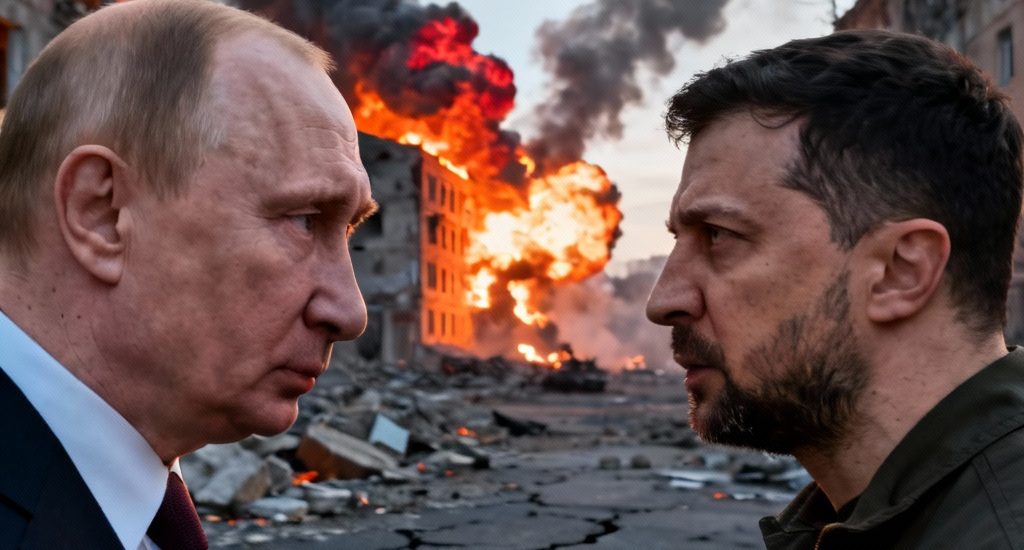
Final Thoughts: Half Measures Invite More Aggression
Ukraine’s crisis in late 2025 stems directly from one thing — America stepping back.
Putin reads the signals perfectly. He knows time works for the side that can produce more weapons faster. Right now, that side is Russia.
The war no longer tests only Ukrainian courage. It tests Western unity and willpower.
If the world’s strongest power blinks, every aggressor on the planet takes notes. Taiwan, the Baltics, and others watch closely.
Until the West commits to multi-year, predictable aid — not stop-and-go packages — Moscow will keep believing it can win by simply waiting us out.
Declining U.S. support didn’t bring peace. It brought escalation.
Read the latest NATO statements here 


